
REMEDY Project Recognized by the European Commission on the Innovation Radar Platform
The European Commission's Innovation Radar has recognized three breakthrough innovations developed within the REMEDY project in the field of regenerative architecture, positioning the project at the forefront of next-generation sustainable construction technologies.
The Archibiome Tattoo for Resistant, Responsive, and Resilient Cities project, coordinated by Dr. Anna Sandak at the University of Primorska, has received Innovation Radar recognition as a high-potential research and innovation project funded by the European Union. The Innovation Radar plays an important role in identifying Europe's most promising research achievements by recognizing breakthrough technologies, connecting innovators with key stakeholders, and accelerating the translation of scientific discoveries into market-ready solutions with societal impact.
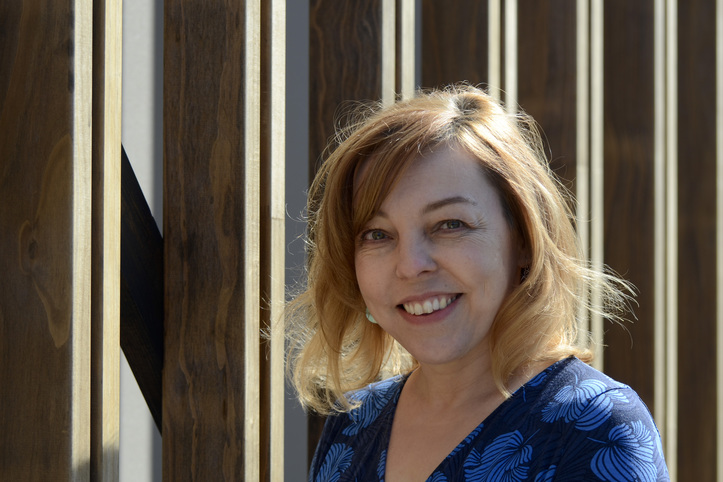
Foto: Aleksander Zdjarsky
»REMEDY represents the next step in the evolution of regenerative architecture, where buildings are no longer passive structures but living systems capable of interacting with and improving their surrounding environment," said Dr. Anna Sandak, Project Coordinator.
The European Commission's Innovation Radar recognized the following innovations:
1) Living engineered material systemsfor bioactive and adaptive building surfaces.
2) Engineered microbial system for air purification, CO₂ capture, and antimicrobial applications in buildings.
3) A platform for printing functional microbial coatings onto building surfaces.
About the REMEDY project
REMEDY is a European research project funded under the European Innovation Council (EIC) Pathfinder programme and is part of the Engineered Living Materials (ELMs) portfolio. The project develops innovative living engineered materials and biofabrication technologies for the next generation of sustainable and regenerative architecture. By combining microbiology, materials science, and advanced biofabrication approaches, REMEDY is developing functional microbial inks that have the potential to transform the way building materials are designed, perform, and are perceived.
A key outcome of the project is the development of the revolutionary Archibiome Tattoo technology—a new generation of high-resolution living microbial inks that enable both personalized decorative designs and functional upgrades for new and existing building surfaces. Unlike conventional construction materials, REMEDY's living engineered systems are designed to enhance environmental performance, support microbial balance, promote carbon sequestration, increase oxygen production, and enable bioremediation.
The project consortium brings together the University of Primorska as project coordinator, the University of Ljubljana, Graz University of Technology, and the industrial partners Tiger Coatings, Qres Technologies, and Xylotrade B.V.
Through interdisciplinary collaboration, REMEDY aims to redefine the relationship between microorganisms and the built environment. The project promotes a new paradigm in which microorganisms are no longer viewed as harmful to buildings but instead become active partners in creating healthier, more sustainable, and more resilient living spaces.
More information is available at: